

Transforming Commercial Spaces into Experiential Destinations
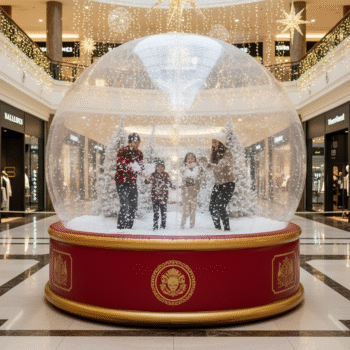
In the competitive landscape of retail and event marketing, static decorations are no longer enough to guarantee foot traffic. Modern consumers, particularly Millennials and Gen Z, prioritize experiences over passive observation. This shift has turned the giant inflatable snow globe into a staple for shopping malls, winter festivals, and corporate brand activations.
Unlike traditional holiday displays, a human-sized snow globe invites the audience inside the narrative. It serves a dual purpose: it is a high-impact visual centerpiece and a functional interactive photo booth. For facility managers and event planners, the return on investment (ROI) comes not just from ticket sales or entry fees, but from the organic social media reach generated when hundreds of visitors share their photos online.
The Mechanics of Viral Marketing with Inflatables
Why do these structures perform so well on social media platforms like Instagram and TikTok? The answer lies in the "frame-within-a-frame" visual appeal. The clear dome creates a perfect stage, isolating the subjects from the chaotic background of a busy mall or festival, while the festive props inside create an immediate emotional connection.
From a marketing perspective, this is user-generated content (UGC) at its finest. By branding the base of the snow globe or the internal backdrop, businesses ensure their logo travels with every shared image. A single installation can generate thousands of impressions daily without additional ad spend.
Technical Anatomy: Ensuring Safe Entry and Exit
For commercial buyers, the primary concern is not just aesthetics, but operational safety and flow. A giant inflatable snow globe is a constant-air structure, meaning it relies on a continuous blower to maintain its shape. The critical technical challenge is allowing people to enter and exit without the dome collapsing due to air loss.
The Airlock Tunnel System
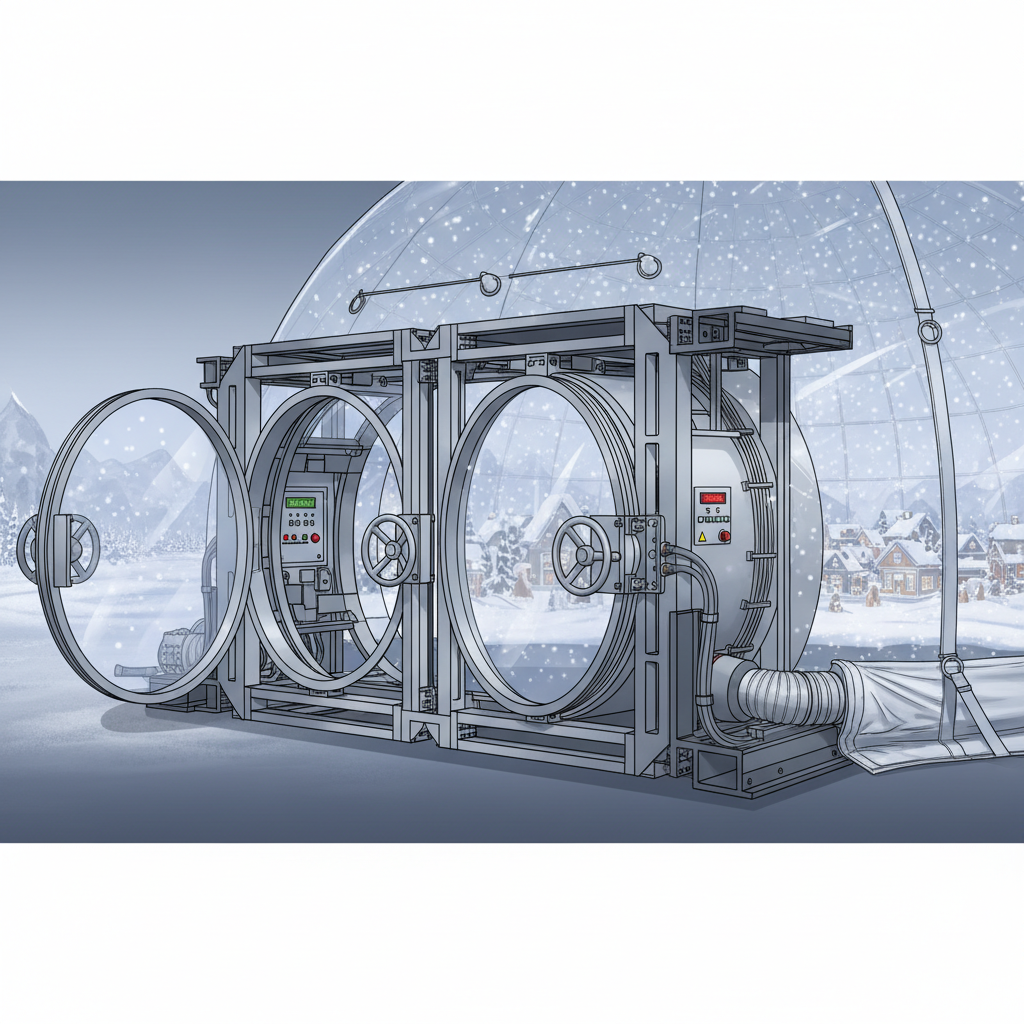
Professional-grade globes utilize a rigid or semi-rigid airlock tunnel system (often called a vestibule). This transition zone is essential for safety and stability.
- Two-Door Protocol: The outer door must remain closed while the inner door is opened, and vice versa. This prevents a rapid drop in internal air pressure.
- Structural Support: High-quality tunnels often feature inflatable pillars or metal frames to keep the entryway standing even if pressure fluctuates.
- Traffic Management: The tunnel regulates the flow of guests, preventing overcrowding inside the main dome.
Material Selection: PVC vs. TPU
The durability and clarity of the globe depend entirely on the material used during manufacturing.
- PVC (Polyvinyl Chloride): The industry standard for indoor use and mild outdoor climates. It offers excellent transparency and cost-effectiveness. However, standard PVC can become brittle in extreme freezing temperatures.
- TPU (Thermoplastic Polyurethane): Recommended for outdoor winter festivals in cold regions. TPU remains flexible and crack-resistant even in sub-zero temperatures. It is also more environmentally friendly and has superior abrasion resistance, though it comes at a higher price point.
Customization Options for Brand Alignment
Manufacturers offer extensive customization to ensure the inflatable aligns with specific campaign themes. Buyers should consider the following configurable elements:
Interchangeable Backdrops
A zip-off or Velcro-attached backdrop allows the same hardware to be used for different holidays. A mall might use a "Winter Wonderland" background in December and swap it for a "Spring Garden" or "Valentine’s Day" theme in February. This modularity extends the asset’s lifecycle significantly.
Base Branding and Skirting
The inflatable base is prime real estate for sponsorship logos. Removable wraps allow event organizers to sell sponsorship space to different partners for different weeks of an event.
Internal Props and Flooring
Commercial units should feature reinforced flooring to withstand high foot traffic (often 100+ groups per day). Custom props—such as blowing "snow" (polystyrene beads)—require a secondary internal blower designed to agitate the lightweight particles without obstructing the view.
Operational Requirements and Safety Checklist
Before purchasing a giant snow globe, procurement teams must evaluate the site logistics.
| Requirement | Details |
|---|---|
| Power Supply | Requires continuous power for the main blower (typically 750W–1500W depending on size). Backup generators are recommended for outdoor events. |
| Anchoring | Indoor units use sandbags or water ballasts concealed in the base. Outdoor units require heavy-duty ground stakes or concrete blocks to withstand wind loads. |
| Staffing | At least one attendant is mandatory to operate the airlock doors and manage the queue. Unsupervised operation is not recommended. |
| Capacity | 3m Diameter: 2–3 adults. 4m Diameter: 4–6 adults (Standard for malls). 5m+ Diameter: Large groups or vehicle displays. |
Buying Guide: What to Ask Manufacturers
When requesting a quote for a commercial inflatable snow globe, clarity reduces lead times and ensures quality.
- Ask about transparency: Request samples or photos of the clear material to ensure it doesn’t look "milky" or foggy.
- Confirm the blower noise level: For indoor malls, low-decibel blowers are crucial to avoid disturbing nearby tenants.
- Check the warranty: Commercial warranties should cover seam integrity and blower function.
- Design files: Be prepared to provide high-resolution vector art (AI or EPS format) for any custom printing on the backdrop or base.
Frequently Asked Questions
Can giant snow globes be used outdoors?
Yes, but they must be anchored properly. If temperatures are below freezing, specify TPU material to prevent cracking. Avoid operation in high winds (typically above 20-25 mph).
How long does setup take?
A typical 4-meter globe takes approximately 30–45 minutes to set up with a two-person crew. This includes unrolling, inflating, anchoring, and installing the backdrop.
Does the fake snow stick to the walls?
Static electricity can cause polystyrene beads to stick to PVC walls. Using anti-static spray or specialized non-static snow materials can help mitigate this, keeping the view clear for photos.
What is the lead time for a custom order?
Production generally takes 2–3 weeks, with shipping adding another 3–5 weeks depending on the destination. It is advisable to order at least 2–3 months before the holiday season begins.
Ready to Boost Your Holiday Traffic?
Giant inflatable snow globes are more than decorations; they are revenue-generating assets that create lasting memories for visitors. Whether you need a standard 4m unit for a shopping center or a fully branded custom activation for a product launch, choosing the right manufacturing partner is key.
Contact us today to request a quote or discuss your custom design requirements.

 English
  Spanish
  French
  Portuguese
  Japanese
  Arabic
  Italian