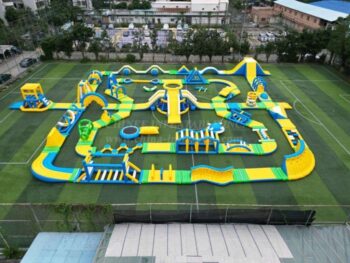


The mobile water park industry has evolved from a niche seasonal attraction into a high-yield investment vehicle for leisure operators worldwide. As summer approaches, investors seek agile, profitable ventures that offer rapid returns. Unlike traditional concrete water parks, which require years of construction and massive capital expenditure, a mobile inflatable water park offers flexibility, lower entry costs, and faster deployment.
However, success is not guaranteed simply by purchasing equipment. Profitability hinges on strategic planning, site optimization, and selecting the right manufacturing partner. At Chinee Inflatable, we move beyond simple equipment supply to provide comprehensive business solutions. This guide explores the critical phases of designing a profitable inflatable water park, from market analysis to operational diversification.
Phase 1: Market Demand & Feasibility Analysis
Before a single inflatable slide is inflated, a rigorous analysis of the local market is essential. A profitable park is one that fits its specific demographic and geographic context. We recommend a data-driven approach to determine the scale and theme of your project.
- Demographic Profiling: Analyze the local population density, age distribution, and family composition. A park located near a university town requires different attractions (high-adrenaline slides, obstacle courses) compared to one situated in a residential family district (shallow pools, toddler zones).
- Competitive Landscape: Evaluate existing entertainment options within a 50km radius. Are there permanent water parks, public pools, or natural beaches? Your mobile park must offer a unique value proposition, such as novelty, proximity, or lower pricing tiers.
- Consumption Power: Assess the local per capita income to set realistic ticket pricing and projected revenue. This data informs the Return on Investment (ROI) calculation and helps determine the maximum budget for equipment acquisition.
Phase 2: Strategic Project Planning & Equipment Selection
Once the market is defined, the equipment must be tailored to meet capacity goals and visitor expectations. Chineeはあなたのインフレータブルウォーターパークのための収益性の高いソリューションを設計します。 involves more than just picking colors; it requires balancing flow, safety, and excitement.
Modular Design & Capacity Management
Effective park design utilizes modular inflatable systems. This allows operators to expand or reconfigure the layout based on crowd size or season. Key considerations include:
- Throughput: High-traffic attractions, such as multi-lane slides, reduce queuing times and increase visitor satisfaction.
- Zoning: Distinct zones for different age groups prevent collisions and enhance safety. For example, separating the “extreme” jump zones from the paddle boat pools is critical.
- Ancillary Integration: The layout should accommodate non-water revenue streams. We assist in planning spaces for snack bars, locker rentals, and swimwear retail kiosks, which can account for 20-30% of total park revenue.
Material Specifications & Durability
For B2B buyers, the longevity of the asset is a primary concern. High-quality inflatable parks are typically manufactured using commercial-grade PVC tarpaulin (0.55mm to 0.9mm thickness). Key technical specs to look for include:
- UV Resistance: Essential for outdoor parks to prevent fading and material degradation under direct sunlight.
- Reinforced Seams: Double or quadruple stitching in high-stress areas prevents ruptures.
- Anchoring Systems: heavy-duty D-rings and ground anchor points are vital for stability against wind loads.
Phase 3: Site Planning & Professional Guidance
The physical layout of your operation directly impacts safety and profitability. Professional site planning ensures that every square meter of your leased land or water surface is utilized effectively.
Site Selection Criteria:
- Accessibility: Easy access for installation trucks and ample parking for visitors.
- Utility Access: Reliable electricity for continuous-air blowers and water sources for filling and filtration systems.
- Surface Conditions: For land-based mobile parks, the ground must be flat and free of sharp debris. Protective ground sheets are mandatory.
Operational Flow:
Our design team maps out visitor flow from the ticket booth to the changing rooms and into the water zones. Avoiding bottlenecks at the entrance and exit points is crucial for maintaining a high turnover rate during peak hours.
Phase 4: Establishing a Robust Profit Model
A sustainable business model relies on multiple revenue streams. While ticket sales are the primary income, a diversified approach stabilizes cash flow.
Diversification Strategies
- Sponsorship & Advertising: The large surface area of inflatable structures and perimeter fencing offers prime real estate for local advertisers.
- F&B Concessions: Partnering with food truck vendors or operating your own snack stalls keeps guests on-site longer, increasing their total spend.
- Events & Team Building: Utilizing the park for corporate team-building events, birthday parties, or televised “wipeout” style competitions can generate significant off-peak revenue.
- VIP Services: Offering fast-track passes or renting out private cabanas provides a premium upsell option.
Manufacturing Quality and Safety Standards
Safety is the bedrock of the amusement industry. Investors must ensure that their equipment complies with international standards such as EN 14960 (for inflatable play equipment). Chinee Inflatable prioritizes rigorous quality assurance, including pressure testing and seam inspection before shipment. Ensuring your park meets these standards not only protects your visitors but also reduces liability insurance costs.
Frequently Asked Questions (FAQs)
1. What is the typical lead time for a custom inflatable water park?
Production times vary based on size and complexity. Generally, a medium-sized mobile park takes 20–35 days to manufacture. Shipping times depend on the destination. We recommend starting the planning process 3–4 months before your target opening date.
2. How long does a commercial inflatable water park last?
With proper maintenance, storage, and cleaning, high-quality PVC inflatable parks typically last 3 to 5 years in commercial environments. Regular inspections and prompt repairs of minor wear and tear can extend this lifespan.
3. Do I need constant electricity for the park?
It depends on the type of equipment. “Constant air” inflatables (like large slides) require continuous blower operation. “Sealed air” units (often used for floating water parks) are inflated once and sealed. Most land-based mobile parks use a combination, so a reliable power source is essential.
4. Can the park layout be changed in future seasons?
Yes. The modular nature of inflatable equipment means you can add new attractions, remove older ones, or completely redesign the layout to keep the experience fresh for returning visitors.
5. What is the ROI timeline for a mobile water park?
While results vary by location and management, many operators achieve ROI within one to two operating seasons due to the relatively low capital investment compared to permanent structures.
Start Your Profitable Water Park Project Today
Designing a profitable solution requires a balance of exciting equipment, strategic site planning, and a solid business model. At Chinee Inflatable, we help investors navigate these choices to build safe, durable, and high-revenue attractions.
Ready to launch your water park project? Contact us today to request a custom design proposal and quote.

 Japanese
  English
  Spanish
  French
  Portuguese
  Arabic
  Italian