

Efficient Packing for Longevity and Logistics

For inflatable rental businesses and event operators, the breakdown process is just as critical as the setup. Knowing cómo enrollar un castillo hinchable grande correctly is not merely about storage; it is a vital maintenance practice that extends the lifespan of your equipment. A tightly rolled unit takes up less warehouse space, fits easier into transport vehicles, and prevents creases or damage to the PVC tarpaulin.
Improper folding can lead to trapped moisture (causing mold), damaged artwork, or loose rolls that are impossible to lift. This guide outlines the standard operating procedure for deflating, folding, and rolling heavy-duty commercial inflatables, ensuring your inventory remains in peak condition for years.
Preparation: The Pre-Roll Checklist
Before initiating the deflation process, a systematic check is required. Rushing this stage often leads to complications during the rolling phase.
- Clean and Dry: Ensure the unit is completely dry. Rolling a wet castle promotes mildew growth which rots the stitching and PVC coating. If the unit was used in rain or washed, allow it to air dry fully.
- Remove Debris: Sweep off leaves, sand, and lost items (coins, jewelry) from the bounce area and slide lanes.
- Detach Accessories: Remove removable slide covers, art panels, or blower tubes if they interfere with the folding lines.
Step-by-Step: Deflation and Air Discharge
A 10-meter by 6-meter commercial inflatable can hold a significant volume of air. Efficient discharge is key to a tight roll.
1. Disconnect Power
Turn off the blower and disconnect it from the inlet tube. Untie all deflation zippers and outlet tubes. These are typically located at the base and sometimes on the sides of the unit.
2. Walk Out the Air
Allow the unit to collapse naturally for a few minutes. To accelerate the process, have crew members walk over the unit without shoes. Start from the front (furthest from the deflation ports) and walk towards the outlets to push the air out. This process typically takes 10 to 15 minutes depending on the size of the inflatable.
Folding Techniques for Commercial Units
The goal of folding is to create a long, narrow strip that is slightly narrower than your storage bag or strap limit.
- Square Off the Unit: Pull the base corners tight so the deflated unit lays flat and rectangular. Tuck in any protruding netting, walls, or obstacles towards the center.
- The Tri-Fold Method: For most standard castles, fold one side one-third of the way into the center. Then, walk down this fold to flatten it. Fold the opposite side over the top, creating a long strip three layers thick.
- Protecting the Exterior: Ensure that the bottom of the inflatable (the dark, heavy base material) ends up on the outside of the final roll. This protects the colorful vinyl and artwork from dragging on the ground.
If you are managing massive units, such as those found in Disfrute de los parques de toboganes hinchables, the folding pattern may differ slightly to accommodate modular sections.
The Rolling Process
Rolling is the most physically demanding part of the operation. A tight roll is essential for easy handling.
Establish the Core
Start rolling from the end opposite the deflation tubes. The first few turns must be incredibly tight. Fold the edge over and kneel on it to compress the material. A loose core will result in a “telescoping” roll that becomes unmanageable.
The Push and Walk
As you roll, maintain constant pressure. One or two people should push the roll forward while others walk on the unrolled section ahead to force remaining air toward the open ports. If air gets trapped, pause and let it escape before continuing.
Securing the Roll
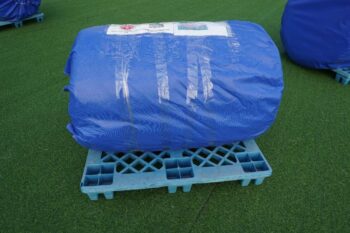
Once the roll is complete, the deflation tubes should be exposed at the end. Tuck them in neatly. Immediately secure the roll with heavy-duty webbing straps. Do not rely on light ropes; commercial PVC requires strong cam-buckle straps to prevent expansion.
Logistics: Loading and Transport
A rolled 10x6m bouncy castle can weigh upwards of 200 kilograms. Manual lifting should be minimized to prevent injury.
- Stand and Tilt: Once strapped, stand the cylinder upright on its end.
- Use Mechanical Aids: Use a heavy-duty hand truck (dolly) or a flatbed cart. Tilt the upright roll onto the cart rather than lifting it from the ground.
- Vehicle Loading: If a lift gate is unavailable, lean the top of the roll against the vehicle bed and lift from the bottom, using the leverage of the roll to slide it in.
Material Quality and Handling
The ease of rolling often depends on the material quality. High-grade 0.55mm PVC tarpaulin is the industry standard for durability, but it is heavier than nylon alternatives. When sourcing inventory, it is crucial to balance durability with operational weight. <a href=”¿En qué debo fijarme al comprar un castillo hinchable?“>What should I pay attention to when buying a bouncy castle? Often, the thickness of the PVC dictates the folding strategy; thicker materials require more people to fold tightly but offer superior longevity.
Troubleshooting Common Issues
| Issue | Cause | Solution |
|---|---|---|
| Cone/Telescope Shape | Uneven folding or rolling at an angle. | Unroll and restart. Ensure the initial fold is perfectly square and pressure is applied evenly across the width. |
| Roll is Too Large for Bag | Trapped air or loose rolling. | Walk out the air more thoroughly. Apply more body weight during the initial core roll. |
| Water Inside Unit | Rain or washing without drying. | Do not store. Inflate immediately in a dry area and use air blowers to circulate air internally until dry. |
FAQ: Operational Best Practices
How many people are needed to roll a large bouncy castle?
For a standard commercial unit (e.g., 5m x 5m), two people are usually sufficient. For larger obstacle courses or slides, a team of three to four is recommended to ensure the roll is tight enough for transport.
Can I leave the blower attached?
No. Always disconnect the blower to prevent damage to the electrical cord and the blower housing. It also prevents the blower from becoming a tripping hazard during the rolling process.
How long can a bouncy castle stay rolled up?
If the unit is dry and stored in a cool, pest-free environment, it can remain rolled for months. However, if there is any moisture present, mold can develop within 48 hours. Always verify dryness before long-term storage.
Summary
Mastering the art of rolling a bouncy castle is a fundamental skill for any rental business. It protects your investment and ensures your team operates safely and efficiently. By following these steps—thorough deflation, precise folding, and tight rolling—you ensure your equipment is ready for the next deployment without issue.

 Spanish
  English
  French
  Portuguese
  Japanese
  Arabic
  Italian