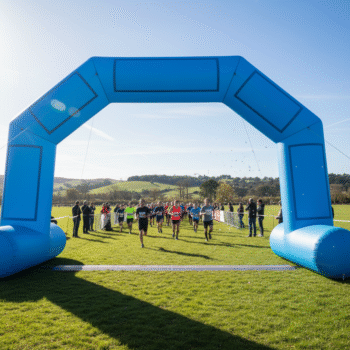


For event organizers and marketing agencies, the finish line is more than just a boundary; it is the most photographed location of a race and the focal point of sponsor engagement. While metal trusses have historically been used for these structures, inflatable arches have become the industry standard for marathons, triathlons, and festivals due to their versatility and ease of use.
Choosing the right inflatable arch involves more than just picking a color. Buyers must consider structural shapes, wind resistance, material durability, and branding flexibility. This guide outlines the technical and logistical factors to consider when procuring custom inflatable arches for your next event.
Why Choose an Inflatable Arch Over Metal Trusses?
The shift from rigid metal structures to pneumatic (air-filled) arches is driven by logistics, safety, and cost-efficiency. Understanding these benefits helps justify the investment to stakeholders.
Logistical Efficiency
A metal truss system often requires a box truck for transport and a specialized crew with tools to assemble. In contrast, a 10-meter (33ft) inflatable arch can typically be packed into a large duffle bag and transported in a standard SUV or station wagon. Setup time is reduced from several hours to approximately 10–20 minutes, requiring only one or two operators to manage the blower and tether lines.
Safety and Liability
Crowd safety is paramount at mass-participation events. If a runner or cyclist accidentally collides with a finish line structure, a metal truss presents a significant injury risk. Inflatable arches are soft structures; in the event of a collision or power failure, they deflate slowly or yield upon impact, significantly reducing liability risks for organizers.
Selecting the Right Shape for Your Event
The shape of the arch affects not only the aesthetic but also the available advertising space and structural stability.
The Classic Round (Semi-Circle) Arch
The semi-circle is the most aerodynamically stable shape. The curvature allows wind to pass over the structure more easily than flat-top designs. However, the rounded top reduces the vertical height available for branding at the very center, which can sometimes distort logos if not sized correctly.
Square and Rectangular Arches
Square arches (or angled corners) are preferred when maximizing sponsorship visibility is the priority. The horizontal top beam provides a flat, rectangular canvas perfect for long banners or text. While excellent for branding, these shapes act more like a sail and may require additional tethering lines (guy ropes) and heavier ballast in windy conditions.
Custom and Angled Shapes
For brands looking to stand out, arches can be designed as polygons (hexagonal) or fully custom shapes (e.g., a giant tire, a bottle, or a shoe). While these offer high visual impact, they often require complex internal baffling to maintain their shape and may have longer manufacturing lead times.
Sizing and Clearance: Getting the Dimensions Right
One of the most common mistakes in ordering inflatable arches is miscalculating the internal clearance. Manufacturers typically quote external dimensions.
- External Width vs. Internal Width: An arch that is 8 meters wide externally may only offer 6 meters of internal clearance due to the diameter of the legs (often 1m or more). Ensure the internal width accommodates the widest flow of runners or vehicles.
- Leg Diameter: Thicker legs (e.g., 1.2m diameter) provide better stability and more room for vertical branding but reduce the finish line width.
- Vertical Clearance: If emergency vehicles, timing clocks, or lead cars need to pass under the arch, ensure the internal height is sufficient. Standard internal heights usually range from 3m to 5m.
Material Selection: Oxford Cloth vs. PVC Tarpaulin
The longevity of your inflatable depends heavily on the fabric choice. Most B2B manufacturers offer two primary options:
PU-Coated Oxford Nylon (210D – 600D)
This is a lightweight, woven fabric. It is cost-effective and easy to transport. It is ideal for events that happen once a year or for organizers who prioritize portability. However, it is less resistant to abrasion and heavy storms than PVC.
PVC Tarpaulin (0.4mm – 0.55mm)
PVC Tarpaulin is the industry standard for rental companies and tour operators. It is heavy, waterproof, UV-resistant, and highly durable. While it is heavier to transport and requires a more powerful blower, it can withstand frequent setup and teardown cycles better than Oxford cloth.
Branding Options: Removable Banners vs. Full Print
How you brand the arch impacts its long-term utility.
Detachable Velcro Banners
For event agencies serving multiple clients, detachable banners are the best choice. The arch is manufactured in a neutral color (often black, blue, or red) with strips of hook-and-loop fastener (Velcro) sewn onto the legs and top beam. This allows you to swap sponsor logos for different events without buying a new structure.
Full Digital Printing
For annual races with a permanent title sponsor, full-surface digital printing offers the most professional look. The graphics are printed directly onto the material before sewing. This eliminates wrinkles associated with banners but limits the arch’s reuse if sponsors change.
Manufacturing and Quality Considerations
When sourcing inflatable arches, pay attention to these construction details to ensure reliability:
- ステッチ: Look for double stitching throughout the unit and quadruple stitching at stress points (bottom of legs and tether points).
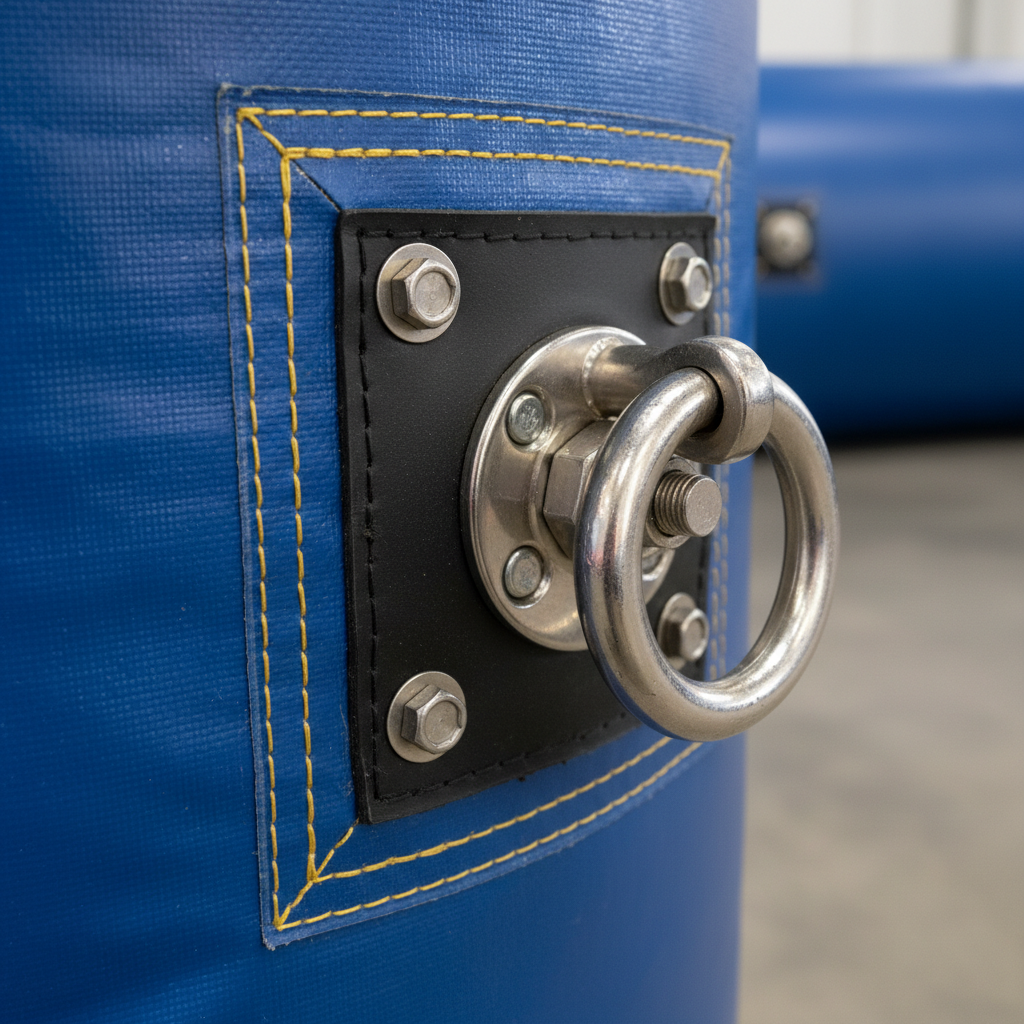
- Anchor Points: High-quality arches use reinforced stainless steel D-rings for anchoring. Ensure there are anchor points at both the base and higher up on the legs for wind stability.
- Zippers: Heavy-duty deflation zippers should be covered with Velcro flaps to prevent air loss during operation and protect the zipper from dirt.
- Blowers: Ensure the provided blower meets local voltage and plug standards (e.g., 110V/60Hz for US, 220V/50Hz for EU/Asia) and has the necessary safety certifications (CE/UL).
Buying Guide: Ordering Your Custom Arch
To ensure a smooth procurement process, prepare the following information before contacting a manufacturer:
- Dimensions: Specify desired internal clearance (width and height).
- Artwork: Have vector files (AI, EPS, PDF) ready for printing. Raster images (JPG, PNG) often pixelate when blown up to arch size.
- Usage Frequency: Tell the supplier if this is for a one-off event or a 50-stop tour; this determines the material recommendation.
- リードタイム Custom manufacturing typically takes 2–3 weeks, plus shipping time. Plan ahead to avoid rush fees or air freight costs.
よくある質問
Do I need a continuous power supply?
Yes, most standard event arches are “sewn” structures that require a continuous air blower to remain inflated. Sealed-air (welded) options exist but are significantly more expensive and heavier.
How do I secure the arch on pavement?
If stakes cannot be driven into the ground, use sandbags or water weights tied to the base anchor points. Ensure the ballast weight is sufficient for the wind conditions.
Can the arch be repaired?
Yes. Small tears in Oxford cloth or PVC can be repaired with a patch kit and adhesive or simple sewing, often provided by the manufacturer.
What is the typical lifespan of an inflatable arch?
With proper care (drying before storage, using ground sheets), a PVC arch can last 5+ years of regular use. Oxford cloth arches typically last 2–3 years depending on frequency of use.
Ready to design a custom finish line for your next event? Contact us today to request a quote or discuss material samples.
 Japanese
  English
  Spanish
  French
  Portuguese
  Arabic
  Italian