

The Challenge of Standing Out in Crowded Venues
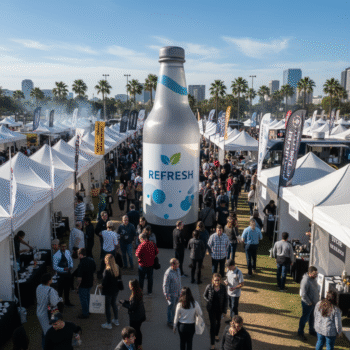
In the competitive landscape of B2B trade shows, outdoor festivals, and grand openings, visual dominance is directly correlated with foot traffic. Standard booth setups—typically consisting of pop-up banners and backdrops—often blend into the visual noise of a crowded exhibition hall. For procurement managers and brand directors, the challenge is not just attending an event, but ensuring the brand is visible from across the venue.
Custom advertising inflatables offer a distinct advantage: scale. Unlike rigid structures which are expensive to transport and labor-intensive to rig, inflatables provide massive volume and height while remaining lightweight and portable. This article explores the strategic application of inflatable marketing tools, detailing the types, material specifications, and manufacturing considerations necessary to maximize Return on Investment (ROI).
The ROI of Inflatable Marketing Assets
When evaluating marketing spend, the Cost Per Impression (CPI) of giant inflatables is often significantly lower than traditional billboards or complex truss structures. A well-manufactured inflatable is a capital asset that can be reused for multiple seasons.
- High Visibility: Inflatables can easily exceed 3 to 6 meters in height, utilizing vertical air space that standard signage cannot reach.
- Portability: A 5-meter inflatable arch often packs down into a carton small enough to fit in a standard vehicle, reducing logistics costs compared to rigid steel or wood structures.
- Speed of Deployment: Most continuous-air advertising inflatables can be set up in under 15 minutes by one or two operators.
Types of Custom Advertising Inflatables
Selecting the right form factor depends on the event type and the specific marketing goal.
1. Giant Product Replicas
For product launches, a giant replica is the most direct form of visual communication. Manufacturers use 3D modeling software to scale down (or scale up) complex shapes—from beverage cans and machinery parts to cosmetic bottles. The goal is high-fidelity reproduction where the inflatable matches the proportions and graphics of the actual product.
2. Inflatable Arches
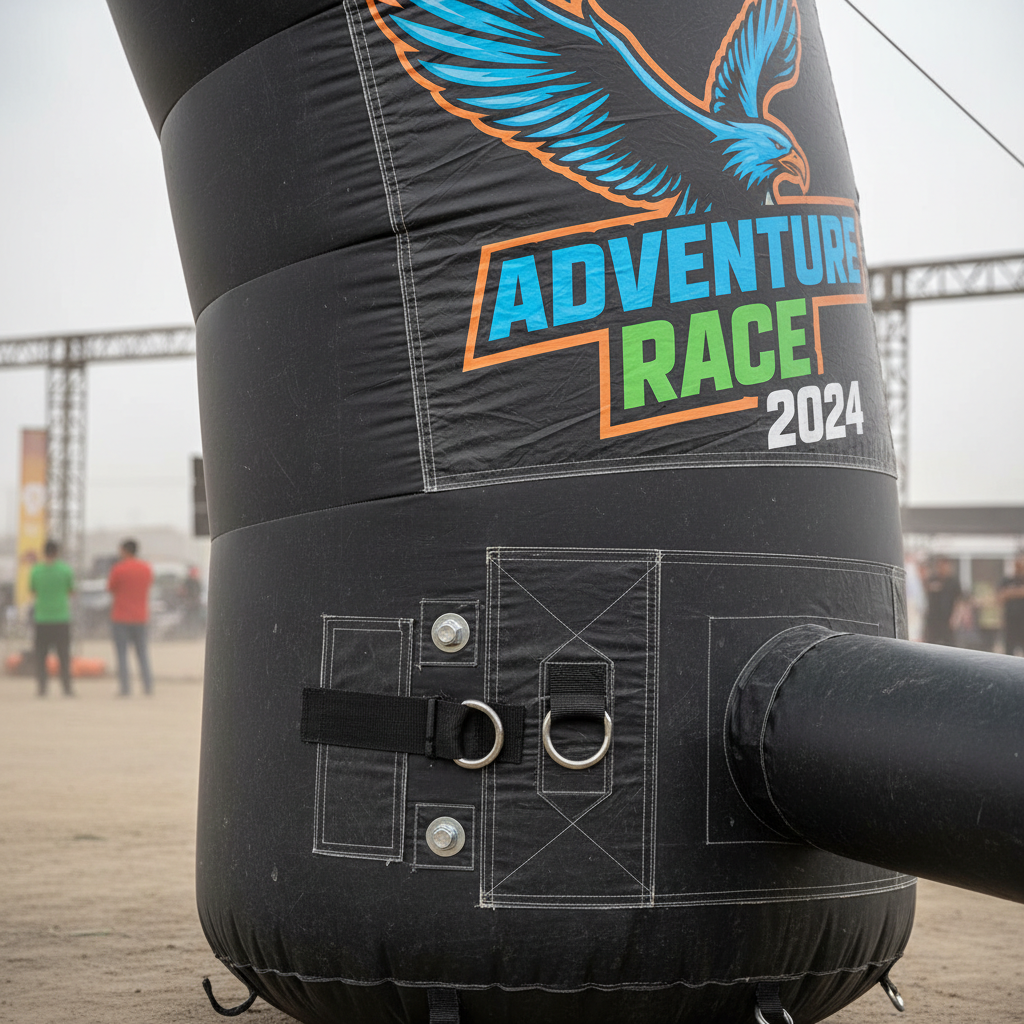
Arches serve as functional landmarks. They are standard for marathons, races, and festival entrances. They offer prime real estate for interchangeable banners (using Velcro or D-rings), allowing brands to update sponsors or messages without replacing the entire unit.
3. Custom Mascots and Characters
Transforming a brand character into a 3D inflatable creates an emotional connection and a photo opportunity for attendees. These are particularly effective for retail store openings and family-oriented events.
Technical Specifications and Material Selection
The longevity and appearance of an advertising inflatable depend heavily on the materials chosen. Buyers should specify materials based on the intended environment (indoor vs. outdoor) and frequency of use.
Material Options
| Materiale | Characteristics | Best Application |
|---|---|---|
| Oxford Cloth (210D – 600D) | Lightweight, easy to transport, cost-effective. Requires continuous blower. | Indoor trade shows, short-term outdoor events, complex shapes. |
| PVC Tarpaulin (0.4mm – 0.6mm) | Heavy-duty, weather-resistant, UV stable. Can be sealed (airtight) or sewn. | Permanent outdoor displays, large arches, harsh weather conditions. |
Printing Technologies
Visual impact relies on color accuracy. Professional manufacturers typically use digital printing or UV printing for complex gradients and photorealistic branding. For simple logos or solid colors, silk screen printing may be used for its durability and cost-efficiency. Always request a color proof or sample swatch if adherence to Pantone (PMS) standards is critical.
Manufacturing and Design Process
To ensure the final product matches the brand vision, the manufacturing process follows a structured path:
- Concept & 3D Rendering: The factory’s design team converts 2D artwork into a 3D model. This is the most critical stage for approval. Buyers must check proportions and artwork placement here.
- Pattern Cutting: Automated cutting machines ensure precision, which is vital for maintaining the shape of complex replicas.
- Stitching vs. Welding:
- Sewn (Stitched): Uses strong nylon thread. Requires a continuous air blower to maintain inflation as air escapes through stitch lines. This is standard for most advertising shapes.
- Welded (Heat Sealed): Uses heat to fuse PVC layers. These units are airtight and do not require a constant power supply once inflated. Ideal for water-based inflatables or locations without power access.
Buying Guide for International Procurement
When sourcing custom inflatables, consider the following factors to ensure a smooth transaction and delivery.
Artwork Requirements
Prepare high-resolution vector files (AI, EPS, PDF) or high-DPI raster images for printing. Low-quality inputs will result in pixelated output when scaled up to giant sizes.
Lead Times and Shipping
Custom manufacturing typically requires 7 to 15 days for production, depending on complexity and quantity. Air freight is the standard for time-sensitive event deadlines (5-10 days), while sea freight is cost-effective for bulk orders (30-45 days). Plan your event calendar accordingly.
Accessori
Ensure the quote includes all necessary accessories: certified blowers (CE/UL listed), tether ropes, sandbags for ballasting, and a repair kit. For specific power standards (voltage/plug type), clearly state the destination country.
Domande frequenti
Can advertising inflatables be used in the rain?
PVC Tarpaulin inflatables are generally weather-resistant. Oxford cloth units can withstand light rain but should not be used in heavy downpours or high winds, as the material absorbs water, becoming heavy and potentially straining the blower.
What is the difference between continuous air and sealed air?
Continuous air units (sewn) need a fan running constantly to stay inflated. Sealed air units (welded) are inflated once with a pump and sealed tight, similar to a pool float, requiring no continuous power.
How do I clean a custom inflatable?
For PVC materials, use mild soap and water with a soft cloth. Avoid harsh chemicals or abrasive brushes that could damage the printing or UV coating. Ensure the unit is completely dry before storage to prevent mold.
What is the typical lifespan of a promotional inflatable?
With proper care, storage, and handling, a high-quality inflatable can last for several years of repeated use. Factors affecting lifespan include UV exposure duration and ground abrasion.
Ready to elevate your brand visibility? Custom inflatables provide a proven, high-impact solution for events of any size. Contact us today to discuss your design requirements and request a quote.

 Italian
  English
  Spanish
  French
  Portuguese
  Japanese
  Arabic