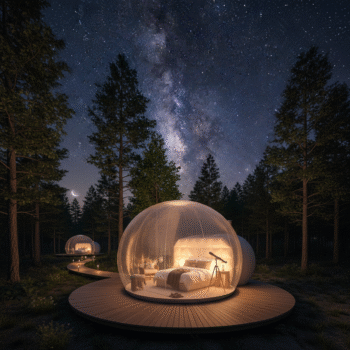


The experiential travel market has seen a significant shift toward unique, immersive accommodations. For resort owners, campsite operators, and Airbnb hosts, the inflatable bubble tent represents a high-ROI entry point into the lucrative "glamping" (glamorous camping) sector. Unlike traditional cabins or yurts, clear bubble houses offer guests an unobstructed view of the sky, creating a premium "stargazing" product that commands higher nightly rates.
However, deploying these transparent structures requires careful planning regarding site selection, material durability, and climate control. This guide outlines the operational and technical considerations for launching a successful bubble tent accommodation business, from sourcing to setup.
The Business Case: ROI and Market Positioning
Inflatable bubble tents offer a distinct advantage in terms of Capital Expenditure (CapEx) compared to permanent structures. A traditional wooden cabin requires significant construction labor, permits, and materials. In contrast, an inflatable bubble lodge is a semi-permanent structure that can often be classified as temporary equipment, potentially simplifying zoning and permitting processes (though local regulations must always be verified).
Key Financial Drivers
- Lower Initial Investment: The cost per unit for a high-quality inflatable bubble is a fraction of hard-shell construction.
- High Average Daily Rate (ADR): Due to the novelty factor and "Instagrammability," operators often price these units at a premium comparable to luxury hotel suites.
- Portability: Units can be deflated and stored during off-seasons to prevent weather damage, extending the asset’s lifespan and reducing maintenance costs.
Technical Specifications: Materials and Durability
Not all bubble tents are suitable for commercial use. For a hospitality business, purchasing consumer-grade toys will lead to rapid failure. Commercial-grade inflatable lodges rely on specific materials and manufacturing techniques to withstand UV exposure, wind, and guest wear.
PVC vs. TPU Materials
The transparent material is the most critical component. Manufacturers typically offer two main options:
- PVC (Polyvinyl Chloride): The industry standard for affordability. High-quality commercial PVC (typically 0.6mm to 1.0mm thick) is durable and clear. However, standard PVC can become brittle in freezing temperatures and may emit a plastic odor when new.
- TPU (Thermoplastic Polyurethane): The superior choice for high-end operations. TPU is odorless, environmentally friendlier, and maintains flexibility in extreme cold. It also resists yellowing over time better than PVC. While the raw material cost is higher, the longevity often justifies the investment for year-round resorts.
Inflation Systems
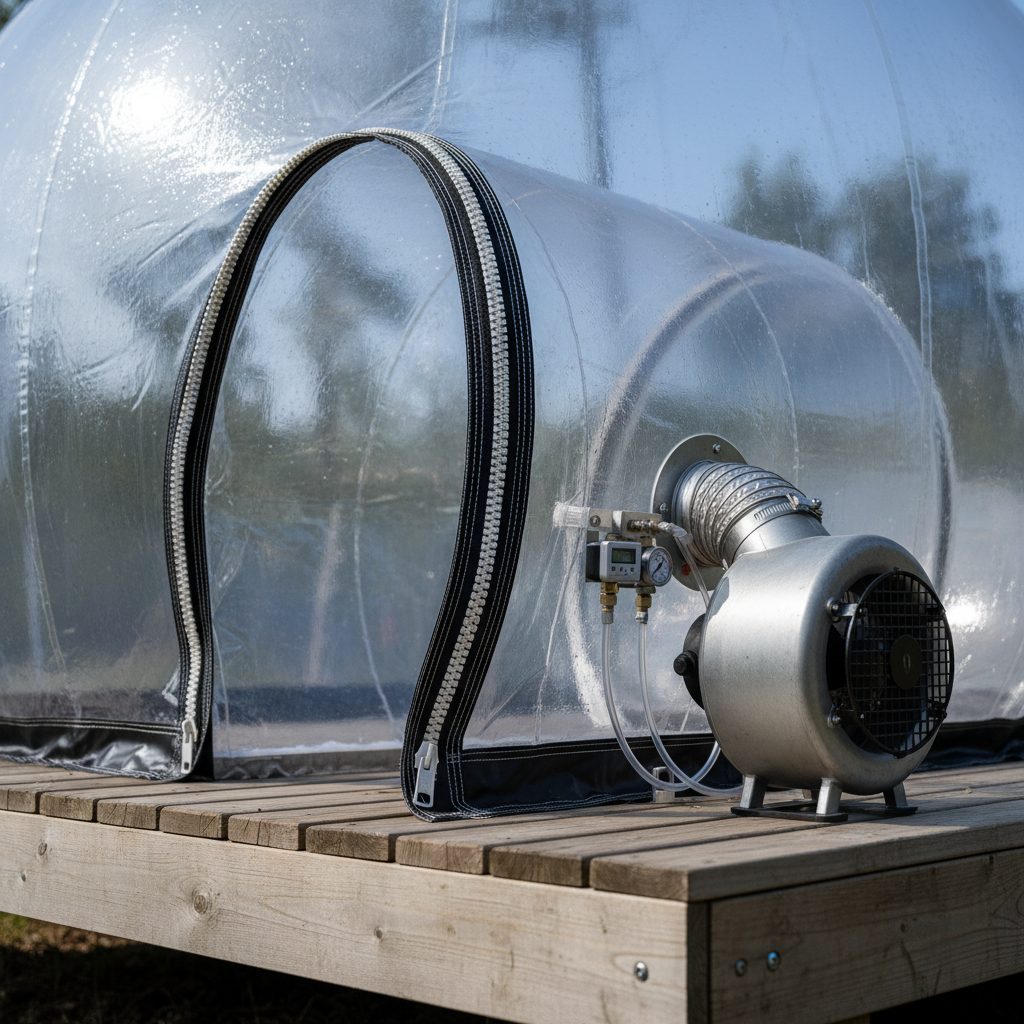
Most bubble tents operate on a continuous inflation system using a quiet, electric blower. This maintains positive air pressure to keep the structure upright. The blower also facilitates air circulation, which is vital for reducing condensation. Operators must ensure a reliable power source (grid or solar with battery backup) is available at the site, as power loss will cause the structure to deflate slowly.
Site Selection and Preparation
Successful deployment depends heavily on where and how the tent is installed. The transparency of the product makes privacy and terrain management paramount.
Privacy Strategy
Since the walls are clear, privacy must be engineered into the landscape. Ideal sites include:
- Secluded Clearings: Surrounded by dense vegetation or fencing.
- Directional Positioning: Orienting the opaque tunnel or bathroom sections toward public paths, while the clear sphere faces a private view (forest, desert, or ocean).
- Internal Curtains: Many commercial models come with integrated curtain tracks allowing guests to enclose the sleeping area when needed.
Platform and Anchoring
Bubble tents should not be placed directly on rough ground to prevent punctures and moisture ingress. A raised wooden deck is the recommended foundation. This provides:
- Level Surface: Essential for furniture stability.
- Anchoring Points: The tent must be secured using heavy-duty D-rings attached to the deck. Inflatable structures act as sails in high winds; proper anchoring is a non-negotiable safety requirement.
- Insulation: Separating the floor from the cold ground helps manage internal temperatures.
Climate Control and Ventilation
A common concern for operators is the "greenhouse effect." A clear plastic dome in direct sunlight will heat up rapidly. Conversely, it offers little insulation against the cold. Managing this is key to guest comfort.
Heat Management
- Shade Solutions: Utilize natural tree cover or install shade sails over the tent during peak sun hours.
- Active Ventilation: Ensure the blower system has sufficient CFM (Cubic Feet per Minute) to cycle air frequently.
- AC Integration: Commercial bubble tents can be customized with ports for portable air conditioning units. This is mandatory for summer operations in warm climates.
Cold Weather Operations
For winter glamping, heating is required. Electric space heaters are common, but safety is priority. Ensure heaters are positioned away from the tent walls. The continuous airflow from the blower means heat is constantly cycled out, so sizing the heater appropriately for the volume of the dome is necessary.
Designing the Guest Layout
The standard configuration usually involves a main spherical room (3m to 6m diameter) and a tunnel entrance. The tunnel acts as an airlock; guests enter the tunnel, zip the outer door, and then open the inner door to prevent the main dome from losing pressure.
Bathroom Solutions: High-end glamping demands ensuite facilities. Manufacturers can fabricate modular "bathroom bubbles"—opaque attached spheres—that connect to the main room. This allows for a chemical toilet, shower, and sink without guests needing to leave the pressurized environment.
Buying Guide: Working with Manufacturers
When sourcing bubble tents for a business, customization is often available. Consider the following when requesting a quote:
- Dimensioni: A 3-meter diameter is suitable for a couple (bed only). A 4-meter or 5-meter diameter allows for a seating area and luggage storage.
- Material Thickness: Specify 0.8mm or thicker for commercial rental use.
- Frame Style: While most are air-supported, some hybrid models use a metal or air-tube frame that does not require continuous blowing. These are quieter but more expensive and complex to transport.
- Warranty and Repair Kits: Ensure the supplier provides a repair kit (patches and adhesive) and clear instructions on field repairs.
Domande frequenti
Is the blower noisy?
Modern blowers are designed to be low-decibel (often around 50-60 dB), similar to a background hum or white noise. Placing the blower box outside the deck or behind a sound barrier further reduces noise.
What happens if the power goes out?
The tent is supported by air pressure. If the blower stops, the roof will slowly settle. It does not collapse instantly, giving guests time to exit. A battery backup (UPS) is highly recommended to bridge short power outages.
How do I clean the clear plastic?
Use mild soap and water with a soft microfiber cloth. Avoid harsh chemicals, ammonia, or abrasive scrubbers, as these will cloud the PVC/TPU and ruin the transparency.
Can these tents stay up year-round?
While possible, it depends on the climate. Heavy snow loads can stress the structure. It is often better to deflate and store them during extreme weather seasons to prolong their life.
Launching a bubble tent glamping site offers a unique opportunity to capitalize on the demand for experiential travel. By selecting commercial-grade materials and planning for site logistics, operators can create a memorable, high-margin destination.
Ready to start your glamping project?
Contact us today to discuss custom sizes, material options, and bulk pricing for your resort or campsite.

 Italian
  English
  Spanish
  French
  Portuguese
  Japanese
  Arabic