

Maximizing Revenue with Interactive Inflatable Games
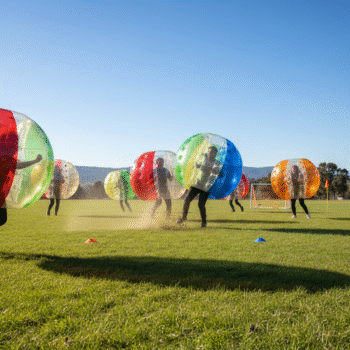
For party rental businesses and event organizers, inventory selection is a balancing act between initial cost, durability, and rental frequency. Inflatable zorb balls and bumper balls (often called knockerballs or bubble soccer suits) have emerged as staples in the industry because they offer a high return on investment (ROI) with relatively low maintenance requirements.
Unlike large inflatable castles that require constant airflow and heavy setup crews, sealed-air games like zorbs and bumper balls are often easier to transport and can be operated in diverse venues, from indoor gymnasiums to outdoor grass fields. This article analyzes the profitability of these units, compares the technical differences between body zorbs and land zorbs, and outlines the manufacturing quality indicators buyers must verify.
Why Zorb and Bumper Balls Are High-ROI Assets
The profitability of inflatable interactive games stems from three operational advantages:
- High Throughput: Games like bubble soccer allow for quick turnover of participants (typically 5–10 minute rounds), accommodating large groups in a short time. This makes them ideal for corporate team building, festivals, and school events where volume matters.
- Portability and Storage: When deflated, a set of 10 bumper balls occupies significantly less warehouse space than a single bounce house. This reduces logistics costs and allows rental companies to transport a full game setup in a standard van.
- Polyvalence : These units do not always require a continuous power supply. Once inflated using a high-output pump, they remain sealed, eliminating the need for generators or long extension cords during the event (unless used within a specific inflatable arena).
Comparing the Options: Body Zorb vs. Land Zorb
While both products involve large inflatable spheres, their construction and use cases differ significantly. Understanding these differences is essential for targeting the right market segments.
1. Body Zorb (Bumper Ball / Bubble Soccer)
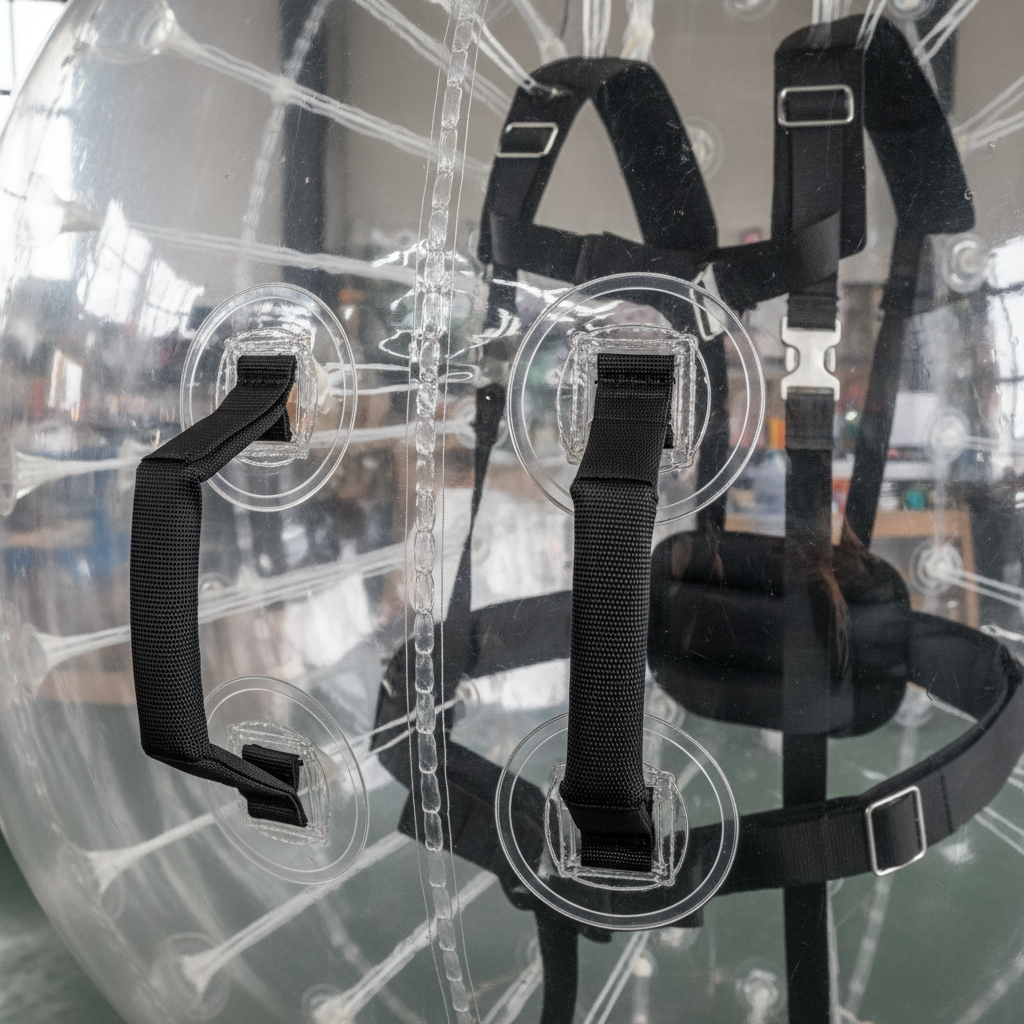
These are donut-shaped spheres where the user slides their upper body into the center, securing themselves with shoulder straps while their legs remain free to run. The primary application is collision games like bubble football or "last man standing."
- Target Audience: Teens and adults; corporate events, bachelor parties, sports clubs.
- Wear and Tear: High impact. Requires robust material to withstand repeated collisions.
- Key Feature: Freedom of movement; users control their speed and direction.
2. Land Zorb (Human Hamster Ball)
A land zorb is a massive double-layered sphere (typically 2.5m to 3m in diameter) where the rider is fully enclosed inside. The rider is either harnessed in (for downhill rolling) or left free to run inside the ball (walking on water or flat ground).
- Target Audience: Adventure seekers, festivals, large outdoor venues.
- Wear and Tear: Abrasion focused. The outer shell constantly rubs against the ground.
- Key Feature: Visual spectacle; often used as a premium attraction at larger events.
| Feature | Body Zorb (Bumper Ball) | Land Zorb (Hamster Ball) |
|---|---|---|
| Diameter | 1.2m (kids) – 1.5m/1.8m (adults) | 2.5m – 3.0m typically |
| User Position | Legs free, upper body enclosed | Fully enclosed inside the sphere |
| Primary Activity | Contact sports, soccer, tag | Rolling downhill, walking on flat ground |
| Setup Requirement | Flat surface (grass/turf/gym) | Long track or gentle slope |
Technical Specifications and Material Choices
Durability is the single biggest factor affecting ROI. If a unit punctures easily or yellows after one season, the investment is lost. When sourcing from manufacturers, buyers must specify the material type.
PVC vs. TPU
- PVC (Polyvinyl Chloride): The budget-friendly option. It is durable enough for occasional use and mild climates. However, PVC can become brittle in cold weather and may harden over time.
- TPU (Thermoplastic Polyurethane): The professional standard. TPU is odorless, highly elastic, and resistant to abrasion. Crucially, it remains flexible in extreme temperatures and does not degrade or discolor as quickly as PVC. For rental companies expecting heavy usage, TPU offers a lower total cost of ownership despite the higher upfront price.
Welding and Reinforcement
High-quality zorbs rely on high-frequency (RF) heat welding rather than glue. RF welding fuses the material layers together, creating a bond stronger than the material itself. Buyers should inspect the anchor points where harness straps attach; these are high-stress areas that require multi-layer reinforcement patches to prevent tearing during vigorous play.
Safety and Operational Best Practices
Operating collision-based games requires strict safety protocols to protect participants and equipment liability.
- Terrain Inspection: Sharp objects are the enemy of sealed-air inflatables. Operators must sweep the area for rocks, sticks, and glass. For land zorbs, a designated inflatable track or barrier system is recommended to keep the ball contained.
- Harness Checks: Before every rental, inspect the shoulder straps and handles. Loose webbing can lead to injury if a user slips out during a roll or collision.
- Height and Weight Limits: Adhere strictly to the manufacturer’s guidelines. For bumper balls, the user’s head must be well below the top of the bubble to ensure protection during a rollover.
- Inflation Pressure: Over-inflation increases the risk of rupture upon impact, while under-inflation reduces the protective air cushion. Use a pressure gauge or follow the manufacturer’s tactile guidelines (firm but with slight give).
Buying Guide for Rental Companies
When procuring inventory from a manufacturer, consider the following to ensure the equipment meets your business needs:
- Customization: Request custom colors or logo printing to reinforce your brand identity at events.
- Repair Kits: Ensure every unit ships with a matching repair kit (material swatches and adhesive). Quick field repairs are essential for maintaining uptime.
- Spare Parts: Order extra harness straps and valves. These are consumables that will wear out faster than the inflatable body.
- Certifications: Verify that the materials meet relevant safety standards (e.g., EN71, SGS test reports) regarding lead content and fire resistance, especially for indoor use.
Questions fréquemment posées
How long do inflatable bumper balls last?
With proper care and TPU material, bumper balls can last 2–3 years in a commercial rental environment. PVC models typically have a shorter lifespan of 1–2 years depending on usage frequency and storage conditions.
Can zorb balls be used on pavement?
No. abrasive surfaces like asphalt or concrete will quickly wear through the material. They should only be used on grass, artificial turf, carpet, or smooth indoor gym floors.
What is the typical inflation time?
Using a standard commercial air pump, a bumper ball takes approximately 2–3 minutes to inflate. A larger land zorb may take 5–8 minutes.
Are repair patches visible?
If repaired correctly using clear material and proper adhesive, patches on clear zorbs are minimally invasive. Professional heat repairs are even less visible.
Request a Quote for Commercial Inflatables
Investing in high-quality interactive inflatables is a proven strategy for growing a rental business. Whether you need a fleet of TPU bumper balls or a custom-branded land zorb, choosing a manufacturer with strict quality control is vital.
Contact us today to discuss your inventory needs, request material samples, or get a quote for your next order.

 French
  English
  Spanish
  Portuguese
  Japanese
  Arabic
  Italian