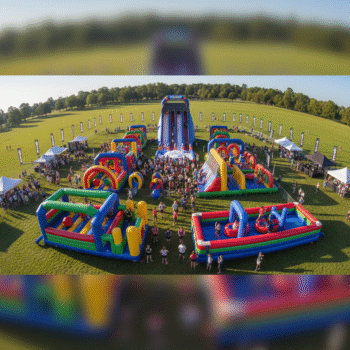


Organizing an inflatable 5K fun run is a logistical challenge that goes far beyond typical race planning. Unlike standard road races, an inflatable 5K introduces massive physical structures that thousands of participants must navigate. For event organizers and rental companies, the profitability of the event hinges on two critical factors: throughput efficiency (avoiding bottlenecks) and equipment durability.
When sourcing equipment for a large-scale event, selecting the right mix of giant inflatable obstacles is not just about aesthetics; it is an engineering decision. This guide outlines the strategic considerations for building a cohesive course, managing participant flow, and ensuring your inventory survives high-traffic public ticketing events.
Designing the Course for Maximum Flow
The most common failure point in a first-time inflatable 5K is the bottleneck. If an obstacle takes 30 seconds for a participant to clear and only accommodates one person at a time, a queue will form almost immediately. For a race with waves of 500+ runners, this leads to frustration and safety hazards.
The Importance of Throughput Capacity
Throughput is calculated by the number of participants that can clear an obstacle per hour. To maintain a steady flow, B2B buyers should prioritize multi-lane designs.
- Lane Width: Look for obstacles designed with dual or quad lanes. A 4-lane wide slide allows four times the throughput of a single-lane unit without occupying significantly more ground space.
- Entry and Exit: Ensure the inflatable has wide, reinforced entry ramps and unobstructed exit zones. The exit area is often where congestion occurs as participants recover or try to stand up.
- Continuous vs. Stop-and-Go: Avoid placing complex “stop-and-go” obstacles (like balance beams requiring slow movement) at the very beginning of the race. Start with high-capacity run-through obstacles to spread the crowd out before they reach more challenging units.
Selecting the Right Inflatable Obstacles
A successful course requires a variety of challenges to keep participants engaged. Manufacturers typically categorize these into slides, crawling courses, and agility challenges. A balanced inventory mix is essential.
Giant Inflatable Slides
Giant slides often serve as the signature piece of the event. However, they are also high-risk zones for bottlenecks. When ordering giant slides for a 5K:
- Height vs. Footprint: Ensure the slide height is impressive (20ft+) but stable. The climbing lane must be durable, often featuring replaceable stair covers to extend the unit’s lifespan.
- Safety Netting: High walls and safety netting at the top platform are mandatory to prevent participants from jumping or falling off the side.
Obstacle Courses and Tunnels
These units are the workhorses of the race. They usually combine crawling, climbing, and squeezing through pillars.
Selection Tip: Choose modular units. Modular obstacle courses can be connected in different configurations (e.g., a 100ft continuous run or broken into three separate stations). This versatility allows you to adapt the course layout to different venue sizes.
“Wipeout” Style Challenges
Agility obstacles, such as big red balls or swinging pendulums, are highly marketable but slow down the race. Place these in the middle or end of the course where the pack has already thinned out. Ensure these units have soft, high-walled landing zones to contain participants who fall.
Material Durability and Manufacturing Standards
For a public event where thousands of adults will trample the equipment in a single day, residential-grade nylon is unacceptable. You must specify commercial-grade materials during procurement.
PVC Tarpaulin Specifications
The industry standard for commercial inflatable obstacles is 0.55mm (18oz) PVC Tarpaulin (often referred to as 1000D). This material is:
- Tear Resistant: Capable of withstanding the tension of heavy adults jumping and climbing.
- UV Resistant: Critical for outdoor events exposed to direct sunlight for hours.
- Fire Retardant: Most international venues require materials that meet NFPA 701 or equivalent fire safety standards.
Reinforcement Techniques
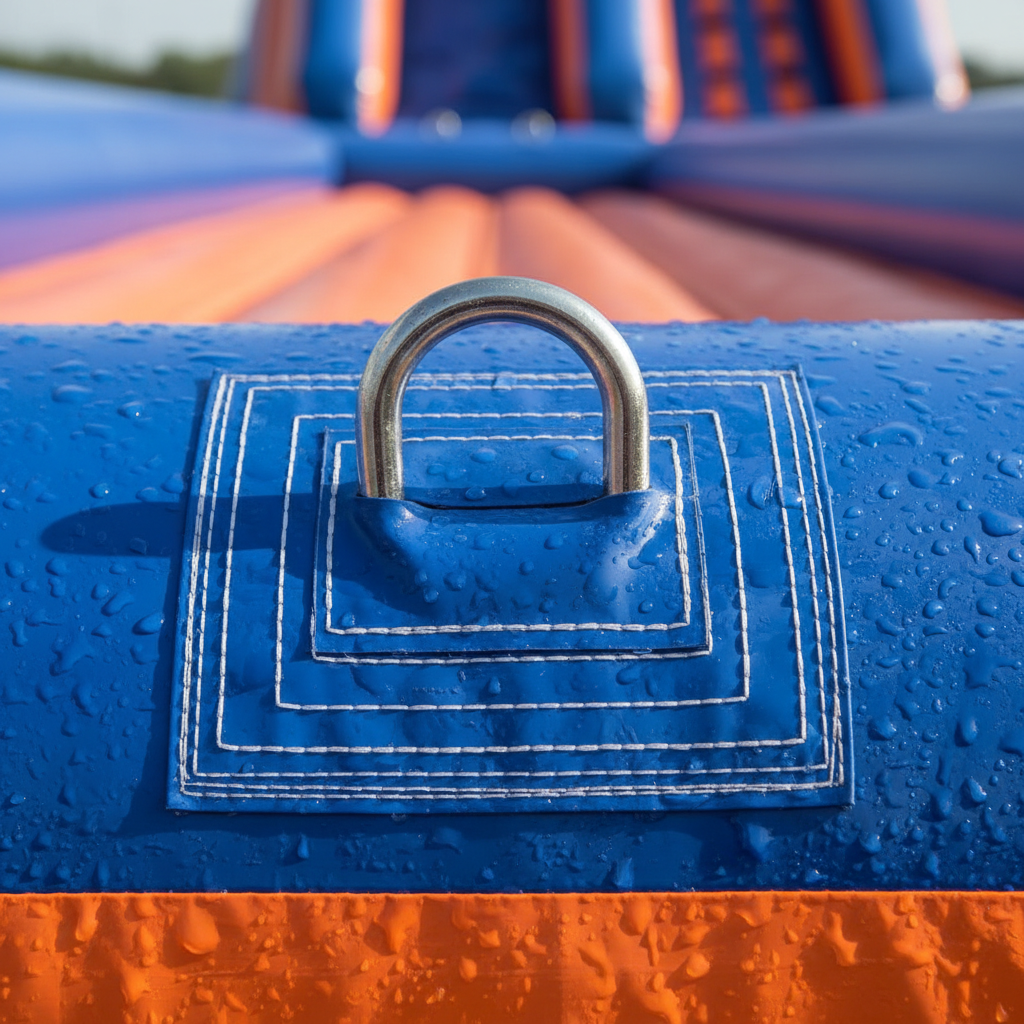
Ask your manufacturer about their stitching techniques. High-stress areas—such as the bottom of slide lanes, pillar bases, and anchor points—should feature quadruple stitching and additional webbing strips. Single stitching will not hold up to the lateral forces exerted during a race.
Logistics: Anchoring, Power, and Safety
Even the best equipment fails without proper logistics. Securing giant inflatables is a primary safety concern.
Sistemas de anclaje
Giant obstacles act as sails in the wind. Your units must come equipped with heavy-duty D-rings (stainless steel) at both the base and higher elevation points.
- Ground Stakes: For grass venues, use steel stakes (minimum 18-24 inches).
- Ballast: For parking lots or hard surfaces, sandbags or water weights are necessary. Calculate the required weight load based on the unit’s size and local wind ratings.
Power Requirements
Inflatable 5K courses require continuous airflow. This means running dozens of blowers simultaneously. Plan your generator layout carefully. A 2HP blower typically draws 15-20 amps on startup and 7-10 amps while running. Ensure your generators can handle the startup load without tripping breakers.
Buying Guide: Customization and Lead Times
When ordering from a manufacturer like Chinee Inflatable, planning ahead is crucial.
Customization: You can brand your obstacles with specific colors or logos. However, full digital printing may fade faster than solid vinyl colors if not protected by a liquid laminate coating. Discuss coating options if your equipment will be in the sun frequently.
Lead Times: Manufacturing a custom 5K course inventory (10-15 large units) takes time. Allow 4-6 weeks for production and additional time for ocean freight. Rush orders often compromise quality control, so start the procurement process at least 3-4 months before your first event.
Frequently Asked Questions
What is the ideal distance between obstacles in a 5K?
Ideally, place obstacles every 400-500 meters. This gives runners time to spread out between challenges, reducing congestion at the next station.
How many staff members are needed per inflatable?
At minimum, one staff member should be at the entrance to control flow and one at the exit to ensure participants clear the area quickly. Large slides may require an additional spotter at the top platform.
Can these inflatables be used in the rain?
Light rain is generally manageable, but wet vinyl becomes extremely slippery, increasing injury risk. Heavy rain or lightning requires immediate deflation. Always consult the manufacturer’s operation manual for weather limits.
What is the lifespan of a commercial inflatable obstacle course?
With proper care (drying before storage, using ground sheets), a commercial-grade PVC unit can last 3-5 years in a rental rotation. High-traffic race events accelerate wear, so regular inspection and patch repairs are necessary.
Ready to build your inflatable 5K inventory? Contact us today to discuss custom designs, bulk pricing, and shipping logistics for your next event.

 Spanish
  English
  French
  Portuguese
  Japanese
  Arabic
  Italian