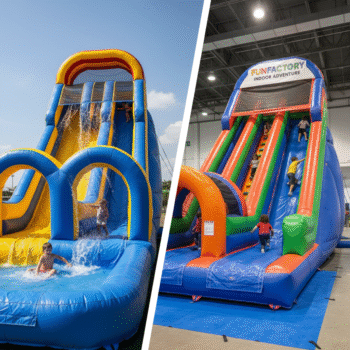


For inflatable rental business owners, inventory planning is a balancing act between maximizing seasonal revenue and ensuring year-round asset utilization. When expanding your fleet, the choice between commercial water slides and dry slides is one of the most significant financial decisions you will make. Both options offer distinct advantages regarding Return on Investment (ROI), maintenance workflows, and operational logistics.
This guide analyzes the technical and operational differences between wet and dry inflatables to help you choose the right manufacturing specifications for your market.
The Core Difference: Seasonality vs. Versatility
The primary distinction between these two categories lies in their operational window. Understanding your local climate and client base is the first step in procurement.
Commercial Water Slides
Water slides are typically the highest-earning assets during peak summer months. In warmer climates, a high-quality water slide can command 30% to 50% higher rental fees than a comparable dry unit due to the added value of the “water park” experience.
- Pros: High demand in summer, higher daily rental rates, significant visual appeal for outdoor events.
- Cons: Strictly seasonal (in most regions), significantly heavier due to water retention, higher labor costs for cleaning and drying.
Inflatable Dry Slides
Dry slides are the workhorses of the rental industry. While they may command a lower daily rate, their ability to be deployed indoors (gymnasiums, convention centers) and outdoors during cooler months often leads to a higher total number of rental days per year.
- Pros: Year-round rental potential, lighter weight for transport, faster setup and teardown, no water bill or drainage logistics.
- Cons: Lower “novelty” factor compared to water slides in summer, potential for friction burns if high-quality slip sheets are not used.
Operational Impact: Maintenance and Logistics
From an operations standpoint, the labor required to maintain these units differs drastically. This hidden cost affects your net profit margin.
Drying and Mold Prevention
Water slides require rigorous post-rental care. Storing a wet inflatable leads to mildew and mold within 24 hours, which can permanently damage the PVC tarpaulin and ruin the aesthetic appeal. Operators must allocate space and time (often 1–2 days) to fully inflate and dry the unit before storage. This increases the turnaround time between rentals.
Weight and Transport
Even when “dry,” a water slide is often heavier due to the additional material required for the pool area and reinforced waterproofing. Furthermore, rolling up a unit that retains residual moisture is physically more demanding for crew members.
Friction and Wear
Dry slides rely on specialized replaceable slip sheets. Since there is no water to reduce friction, the sliding surface takes more abuse. When ordering dry slides, it is critical to specify high-grade Velcro-attached slip sheets (liners) that can be easily replaced without repairing the main structure.
The Hybrid Solution: Detachable Pools and Stoppers
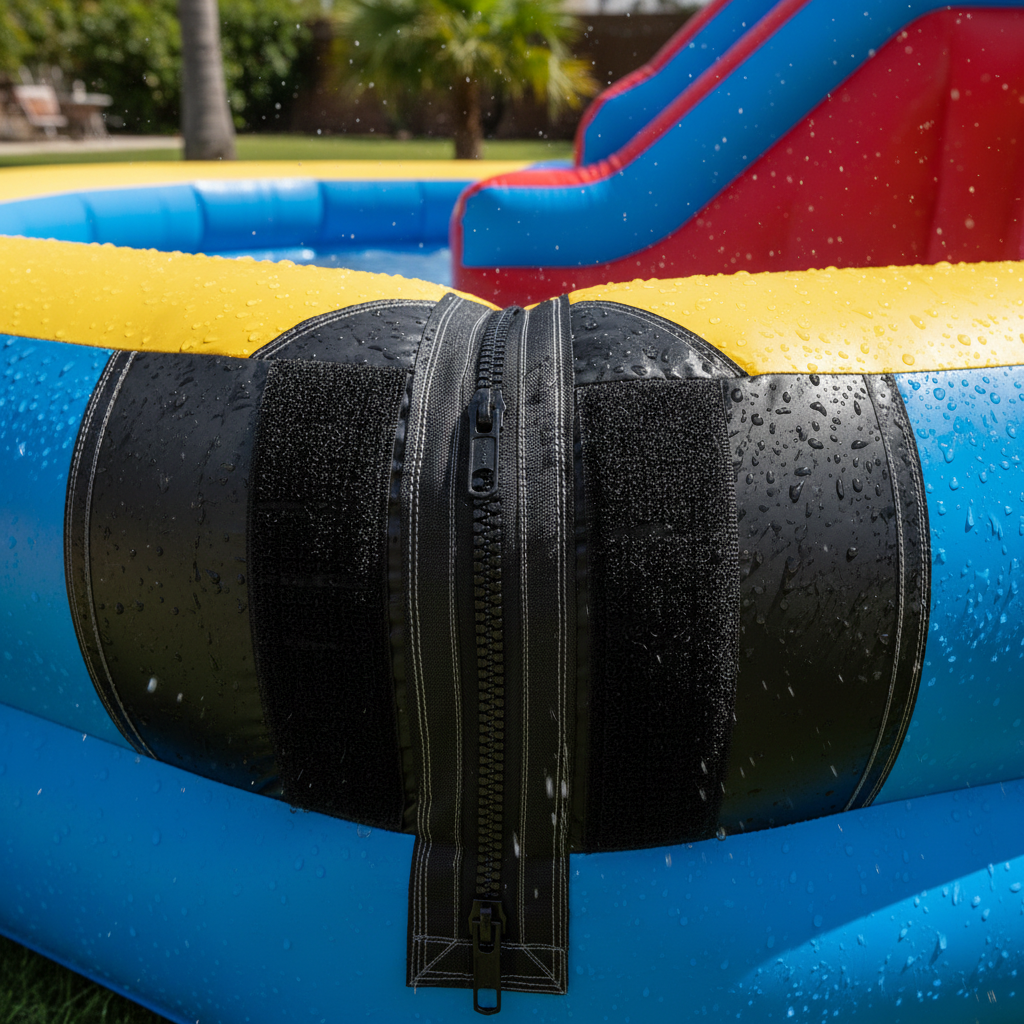
For many rental businesses, the smartest investment is a hybrid inflatable slide. Manufacturers can design units with a modular landing area.
- Wet Mode: Attach an inflatable pool at the bottom for summer use.
- Dry Mode: Detach the pool and attach a bumper/stopper or landing mattress for indoor or cool-weather use.
This “2-in-1” design requires precise manufacturing tolerances to ensure the Velcro or zipper connections are secure and safe, but it effectively doubles the potential rental season of a single asset.
ROI Comparison Table
| Característica | Water Slide | Dry Slide | Hybrid Unit |
|---|---|---|---|
| Rental Rate | High | Medium | High (Wet) / Med (Dry) |
| Seasonality | Summer Only | Year-Round | Year-Round |
| Turnaround Time | Slow (needs drying) | Fast (wipe & pack) | Variable |
| Maintenance Cost | High (mold risk) | Low (wear & tear) | Medium |
| Initial Investment | Higher (complex build) | Lower | Highest (modular parts) |
Technical Specifications to Look For
Whether you choose wet or dry, the manufacturing quality determines the lifespan of the unit. Low-quality inflatables will fail at the seams under the stress of commercial rental use.
Material Quality
Ensure the manufacturer uses commercial-grade 0.55mm (18oz) PVC Tarpaulin. This material is fire-retardant, lead-free, and resistant to UV damage. For water slide pools, some manufacturers use heat-sealed seams rather than stitching to ensure the pool holds water without leaking.
Reinforcement
Look for double stitching everywhere and quadruple stitching at high-stress points (bottom stress points, corners, and slide transitions). Webbing strips should reinforce all joints.
Safety Features
- Netting: Small-hole mesh netting on top of the slide platform prevents riders from jumping or falling out.
- Anchoring: Heavy-duty D-rings are essential for securing the unit against wind, especially for tall water slides.
- Drainage: Water slides must have strategically placed flaps to allow water to drain quickly from the internal baffles during deflation.
Buying Guide: Customization and Lead Times
When sourcing from a manufacturer, consider the following to optimize your inventory:
- Custom Branding: Request your logo and rental phone number to be printed directly on the unit. This turns every rental into a billboard.
- MOQ (Minimum Order Quantity): Most manufacturers allow an MOQ of 1 unit for large slides, but ordering mixed containers (slides + bouncers) can reduce shipping costs per unit.
- Plazo de entrega: Production typically takes 15–25 days, with ocean freight adding 30–45 days. Plan your summer inventory purchases in winter to ensure arrival before the season starts.
Preguntas frecuentes
Can I use a regular dry slide as a water slide?
Generally, no. Dry slides are not designed to hold water at the bottom. Without a proper pool or sealed seams, water will leak into the interior baffles, causing mold and structural damage. Always check if the unit is rated for “wet use.”
What is the lifespan of a commercial slide?
With proper maintenance, a commercial-grade PVC slide can last 3–5 years in a heavy rental rotation. Hybrid units may require replacing the pool attachment sooner than the main body.
Do water slides require a constant blower?
Yes, like dry slides, commercial water slides are “constant air” inflatables powered by a continuous blower. The pool area may be sealed (air-tight) in some designs, but the slide structure usually requires constant inflation.
How do I prevent mold on water slides?
The only effective method is thorough drying. After the rental, inflate the unit in a dry area, open the zipper flaps, and let the blower run for several hours until all moisture inside the baffles has evaporated.
Ready to Expand Your Rental Fleet?
Choosing between wet and dry slides depends on your business model and climate. At Chinee Inflatable, we specialize in manufacturing high-durability commercial inflatables tailored to your specifications, including versatile hybrid designs.
Contact us today to request a quote or discuss custom designs for your next season’s inventory.

 Spanish
  English
  French
  Portuguese
  Japanese
  Arabic
  Italian